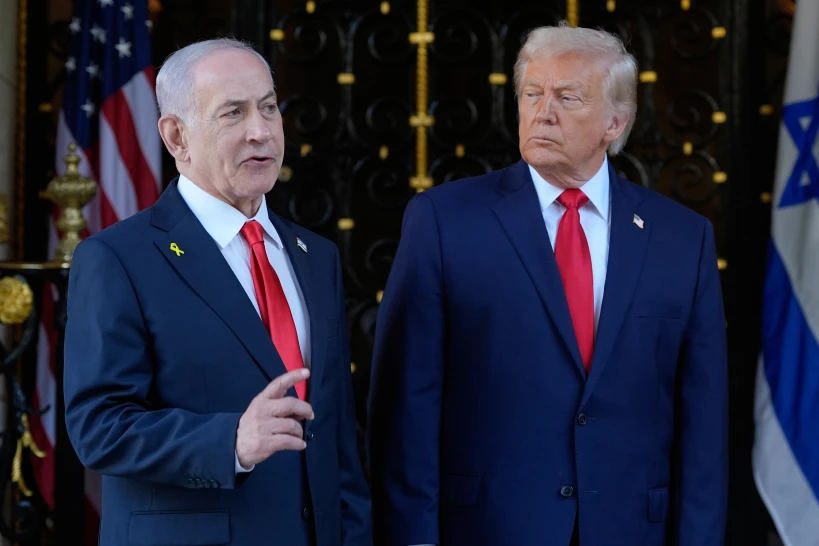
The United States has moved to suspend $4 billion in military and economic assistance to Israel as the country pursues a deliberate strategy of reducing its reliance on American support — a shift that is reshaping one of Washington's most consequential and complicated alliances.
A Strategic Rupture in One of Washington's Oldest Alliances
The United States has announced a halt to approximately four billion dollars in annual aid to Israel, in a move that marks a significant inflection point in one of Washington's most enduring and politically sensitive foreign relationships. The decision, confirmed by senior administration officials and reflected in revised foreign assistance budget documents, comes at a moment when Israel has been quietly but deliberately reducing its dependence on American military hardware, defense financing and diplomatic cover. For decades, the relationship between the United States and Israel was anchored in part by substantial flows of American military assistance, which provided Israel with advanced weapons systems, joint research funding and preferential access to American defense procurement. That arrangement served both parties: Washington gained a reliable strategic partner in a volatile region, while Israel secured both material support and the assurance of American backing in multilateral forums. The announcement that this arrangement is being fundamentally altered reflects changes on both sides of the relationship. American officials have cited shifting strategic priorities and domestic fiscal pressures. Israeli officials have pointed to growing indigenous defense production capabilities and a broader national goal of reducing strategic vulnerability to changes in Washington's political climate. The simultaneous movement in both directions has produced a moment of rare convergence, even if the underlying motivations differ substantially.
Israel's Push for Strategic Self-Reliance
Israel's drive toward reduced dependence on American assistance did not emerge suddenly from the current diplomatic friction. It has been a goal discussed within Israeli defense and policy circles for years, rooted in a desire to insulate the country from the political volatility of American electoral cycles and shifting congressional attitudes toward foreign aid. The Israeli defense industry has expanded significantly over the past two decades, developing domestic production lines for missile defense systems, armored vehicles, drones, surveillance technology and precision munitions. Israeli companies have become global exporters of defense technology, supplying militaries across Europe, South Asia and elsewhere, and generating revenue that has partially offset dependence on American equipment purchases. Israeli officials have also pursued a broader diplomatic strategy of cultivating bilateral relationships with major powers outside the United States, including India, Greece, Cyprus, several Gulf states and to a carefully managed extent certain European nations. These relationships provide alternative channels for military cooperation, intelligence sharing and economic partnership. Senior Israeli defense officials have stated publicly that the goal is not to end the alliance with the United States but to place it on terms that reflect a more equal partnership rather than a dependency relationship. The practical implication is that Jerusalem has been building toward this moment even before Washington signaled a change in its own aid posture. The convergence of an Israeli national strategy and an American policy adjustment has therefore accelerated a transition that may have taken considerably longer under different political circumstances.
What the $4 Billion Represented and What Its Suspension Means
The aid package being suspended is not a single line item but a composite of several streams of assistance that have accumulated over decades of annual congressional appropriations and bilateral memoranda of understanding. The largest component is military financing through the Foreign Military Financing program, which allows Israel to purchase American-made defense equipment at favorable terms. A portion of this assistance has historically been allocated specifically for procurement of American weapons systems and defense goods, ensuring that the aid served both Israeli security needs and American defense industry interests. Additional elements include joint research and development funding for programs such as Iron Dome enhancements and next-generation missile defense systems, cooperative industrial agreements that embedded American components into Israeli military platforms, and economic support fund transfers that have largely declined over recent decades as Israel's own economy matured. The suspension of this aid does not immediately remove any weapons systems from Israeli service or sever existing defense cooperation agreements. Its effects are more structural and longer-term: it eliminates funding that Israel would have used to purchase future equipment, removes co-development resources and signals a change in the implicit American commitment that has underwritten Israeli defense planning for generations. For Israel, the near-term operational impact is manageable precisely because the country's earlier investments in domestic production capacity were designed to provide resilience in exactly this kind of contingency. Israeli defense planners had long argued that diversification of supply chains and domestic production was not merely an economic preference but a strategic imperative for a country operating in an unpredictable geopolitical environment.
The Domestic American Politics Behind the Decision
The decision to halt aid to Israel has generated intense debate within the United States, touching long-standing divisions over foreign policy priorities, fiscal responsibility, the appropriate use of American leverage abroad and the future of a bilateral relationship that carries powerful domestic political significance. Within Congress, reactions have broken in ways that do not map cleanly onto the traditional partisan divide. Some members who have historically been among Israel's most vocal supporters in Washington have argued that conditioning or suspending assistance damages American credibility and undermines a democratic ally. Others, including legislators focused on federal spending and those who have expressed concerns about American entanglement in the region's conflicts, have expressed support for reevaluating the assistance relationship. Administration officials have framed the decision in terms of strategic modernization rather than abandonment, arguing that the nature of the United States-Israel relationship should evolve as both countries' circumstances change. They point to Israel's economic development, its robust defense industry and its expanding diplomatic footprint as evidence that the country is well positioned to operate with greater self-sufficiency. Critics of the decision argue that regardless of Israel's capabilities, the signal sent by halting assistance emboldens adversaries in the region and communicates to other American allies that long-standing commitments can be revised based on domestic political calculations. The debate has also renewed broader arguments about the purpose and limits of American foreign assistance programs, with some analysts arguing the current moment provides an opportunity to renegotiate the terms of relationships across the American alliance system.
Regional Implications and the Shifting Middle East Equation
The American decision arrives at a moment of significant flux in Middle Eastern geopolitics, with regional alignments shifting and multiple actors recalibrating their strategies in response to changes in both American engagement and Israeli military operations over the past several years. Gulf states that have pursued normalization frameworks with Israel are watching the American decision closely, examining what it communicates about the depth of Washington's commitment to its regional partnerships. Some Gulf officials have privately expressed concern that a United States willing to substantially alter its Israel relationship signals a broader appetite for retrenchment that could affect American security guarantees more broadly. Iran and its affiliated networks have pointed to the decision as evidence of what they characterize as the declining reliability of American support for Israeli actions in the region. Analysts caution that such interpretations may be premature, since the American-Israeli defense cooperation relationship involves elements that exist outside the formal aid structure and would likely persist even as the specific financial assistance streams are suspended. For Israel, managing the regional consequences of the moment requires demonstrating that the country's military capacity remains formidable regardless of the change in American assistance. Israeli officials have been deliberate in public communications about the transition, seeking to project confidence while acknowledging that the relationship is entering a new phase. The practical military balance in the region has not immediately shifted, but perceptions of American commitment play a significant role in deterrence calculations that all regional actors continuously reassess.
What Comes Next for the American-Israeli Relationship
Despite the significance of the aid suspension, most analysts who study the American-Israeli relationship caution against interpreting the development as a fundamental rupture in the alliance itself. The two countries share intelligence relationships, defense technology agreements, diplomatic coordination mechanisms and deep historical ties that extend well beyond the specific financial assistance now being suspended. What appears to be changing is the structural form of the relationship rather than its fundamental orientation. American and Israeli officials have both indicated that discussions about a reformulated framework for the alliance are ongoing, with conversations focused on defense cooperation agreements that reflect Israel's greater self-sufficiency, potentially including updated co-production arrangements, modified joint research agreements and revised diplomatic consultation mechanisms. The emerging model may more closely resemble American defense relationships with countries such as the United Kingdom or Germany, which are built on partnership rather than dependency and do not involve the kind of open-ended financial assistance that has characterized the American-Israeli relationship for decades. For Israel, the transition carries both risks and opportunities. The risks involve navigating a period of strategic adjustment in which the implicit American guarantee that has shaped Israeli defense planning is becoming more conditional and explicitly defined. The opportunities involve completing the shift to genuine strategic independence that Israeli planners have long identified as a national priority. For the United States, the decision reflects a broader reassessment of how American resources and commitments are deployed globally, with an emphasis on partnerships that are sustainable, mutually beneficial and adapted to the strategic environment of the coming decades rather than the Cold War framework in which many existing aid relationships originated.