As Republicans face mounting anxiety ahead of the 2026 midterms, President Trump is doubling down on his own brand of politics — holding rallies, endorsing loyalists, and insisting that the party's path to victory runs directly through him.
A Party Searching for a Strategy Turns to Its Polarizing Leader
With the 2026 midterm elections approaching and Republican strategists growing increasingly anxious about the political environment, the party's most prominent answer to its troubles has remained the same figure who has dominated American politics for the past decade: Donald Trump. Rather than moderating the party's message or distancing itself from a president whose approval ratings have shown persistent softness with independent voters, the Republican establishment has largely accepted — or embraced — the proposition that enthusiasm among Trump's core base represents the most reliable path to preserving congressional majorities. Trump himself has shown little interest in recalibrating his approach. He has continued holding large rallies in battleground districts, recording endorsement videos for candidates at every level, and framing every competitive race in the country as a referendum on his administration. Party leaders who once debated whether Trump was an electoral asset or liability now find themselves in a familiar position: dependent on his fundraising power and his ability to mobilize voters who otherwise might not show up. Republican National Committee officials have described the president's level of engagement in the midterm cycle as unusually high for a second-term president, pointing to his willingness to campaign in states far from the traditional swing-state map. The strategy reflects a bet that the voters Trump can activate will outperform any gains Democrats might secure among suburban moderates and disaffected Republicans. Whether that calculation will hold in 2026, however, remains one of the central unresolved questions of the election year.
Rallies and Endorsements: The Trump Midterm Playbook
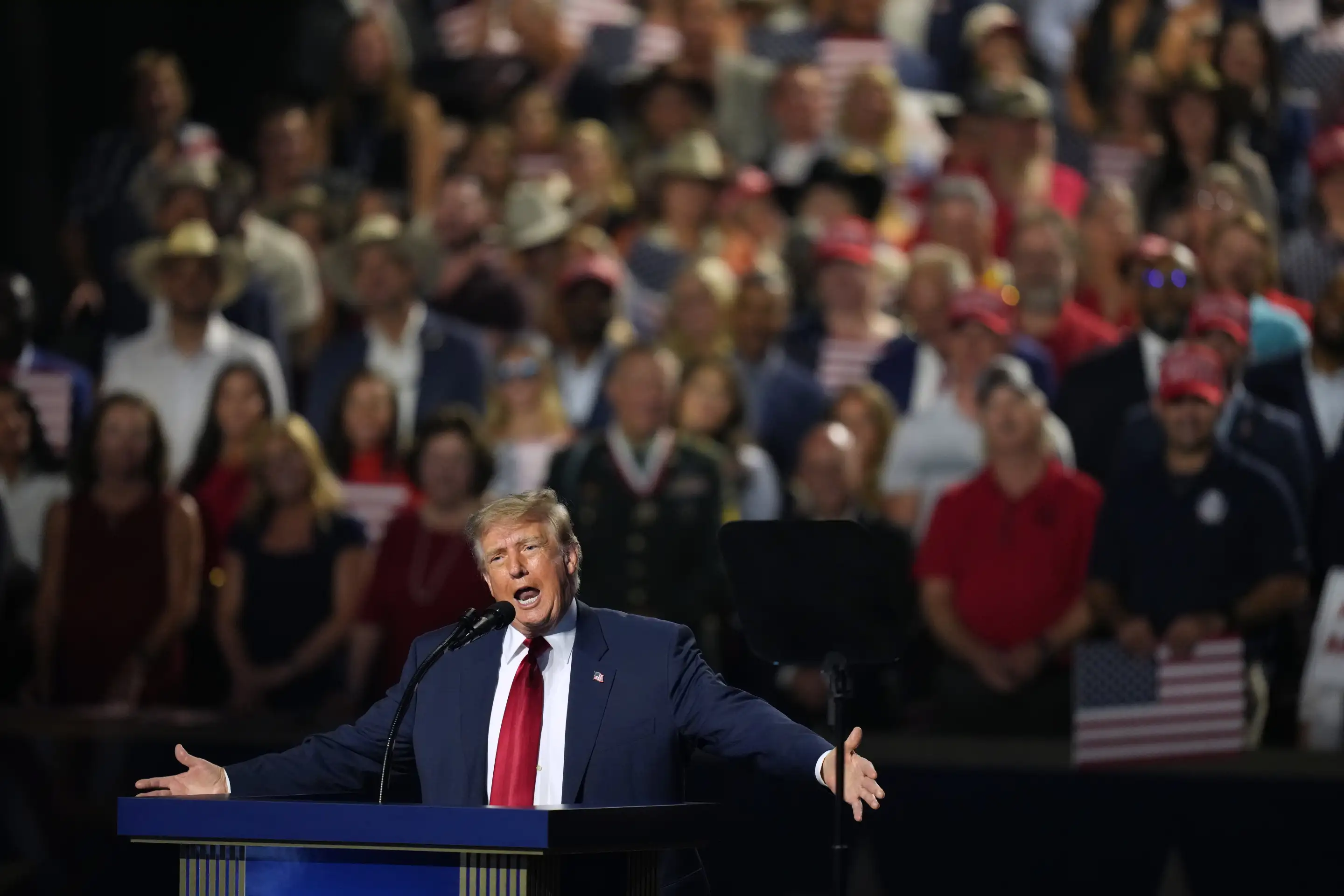
The operational heart of Trump's midterm involvement has been a busy schedule of rallies and a steady stream of endorsements that have shaped Republican primaries across the country. Trump has made a point of backing candidates who demonstrate personal loyalty to him while using his endorsement as a political weapon against incumbents or challengers he considers insufficiently supportive of his agenda. The approach has produced a Republican primary field heavily tilted toward candidates who mirror Trump's style and messaging, even in districts where that posture may complicate general-election competitiveness. In several competitive House seats, Trump-endorsed candidates defeated more moderate rivals in primaries, setting up matchups that party strategists privately concede could be more difficult than necessary. The president has also used his rally appearances to reinforce the partisan framing he prefers, portraying the midterms as a binary choice between his vision and what he describes as Democratic extremism. The events themselves draw large crowds and generate significant media coverage, giving Trump a platform that few midterm leaders could replicate. Republicans who support the strategy argue that enthusiasm and turnout advantages among Trump voters have proven more decisive in past elections than traditional models suggested. Critics within the party worry that the strategy leaves Republicans exposed in competitive suburban districts where independent voters are skeptical of Trump's tone and some of his administration's more controversial policies. The tension between activating the base and appealing to swing voters is a recurring challenge for any party in a midterm cycle, but it has taken on particular intensity for Republicans because Trump's political identity is so difficult to separate from the party's broader brand.
The Base vs. the Suburbs: Republicans' Core Electoral Dilemma
The central tension defining Republican midterm strategy in 2026 is the same one that has shadowed the party since Trump first ran for president in 2016: how to simultaneously energize a loyal and enthusiastic base while winning back suburban voters who have drifted away from the party in recent election cycles. The 2018 midterms demonstrated the electoral cost of suburban erosion, as Republicans lost the House majority in significant part because college-educated voters in metropolitan areas shifted sharply toward Democrats. Those trends did not fully reverse in subsequent cycles, and Republican strategists in some competitive districts have expressed concern that Trump's continued dominance of the party's public identity makes it difficult to recalibrate the message for persuadable voters. The issue is especially acute in districts that were once reliably Republican but have become more competitive as demographic and educational shifts have altered the electorate. In suburbs outside major cities in states such as Pennsylvania, Michigan, Virginia and Arizona, Republican candidates face voters who may support some elements of the party's economic platform but who have expressed discomfort with Trump's style and some of his administration's cultural priorities. The dilemma is compounded by the fact that distancing from Trump carries its own risks. Republican candidates who have attempted to maintain some independence from the president have found themselves facing primary challenges, fundraising difficulties or hostile coverage from conservative media. The result is a party that has become structurally dependent on Trump's political apparatus even when individual candidates might privately prefer more flexibility. As the November elections approach, Republican campaign officials are watching suburban polling data closely, looking for signs of whether the base-turnout strategy will be sufficient.
Democrats See an Opening in Trump's Continued Presence
Democratic Party strategists have made a calculated decision to ensure that Trump remains as visible as possible in the minds of midterm voters, viewing his continued high-profile involvement in Republican politics as one of their most valuable electoral assets. Rather than focusing their campaigns primarily on local issues or candidate qualities, many Democratic committees have structured their messaging around Trump's record, his administration's policies and what they argue are the consequences of Republican loyalty to a president they describe as harmful to democratic norms and economic stability. The strategy represents a bet that voters who disapprove of Trump but might otherwise stay home or split their tickets can be motivated to turn out against Republican candidates by keeping the focus on the president. Democratic congressional committees have invested heavily in advertising that ties Republican incumbents to Trump, particularly in suburban districts where the president's favorable ratings are weakest. The effectiveness of that approach depends in part on turnout patterns and whether the enthusiasm driving Republican primary voters translates into general-election participation at comparable levels. Democrats also believe that several of Trump's second-term policy initiatives, including changes to federal programs, actions on immigration enforcement and ongoing legal controversies, provide fresh material to make the case against Republican candidates who have supported the administration's agenda. Whether those issues resonate strongly enough to overcome structural advantages Republicans hold in some districts remains to be seen. The midterm political environment has shown signs of volatility that make confident predictions difficult, but Democratic officials have expressed optimism that conditions favor their candidates in a sufficient number of districts to contest control of at least one chamber of Congress.
What History Says About Second-Term Midterms and Presidential Influence
Historical patterns offer both cautionary signals and points of reassurance for Republicans navigating a second-term midterm cycle with Trump as the defining figure. The general rule in American politics is that the party controlling the White House tends to lose seats in midterm elections, as voters use the opportunity to express dissatisfaction or register concern about the direction of the country. Second-term presidents have often seen this dynamic play out with particular force, as the novelty of an administration has faded and accumulated policy decisions have produced opposition. President George W. Bush's Republican Party suffered significant losses in the 2006 midterms, driven in part by public frustration with the war in Iraq and broader concerns about government competence following Hurricane Katrina. Barack Obama's Democrats experienced dramatic House losses in 2010 as backlash against the Affordable Care Act and economic anxiety mobilized Republican voters. Trump's own first-term midterms in 2018 followed the historical pattern, with Democrats recapturing the House majority in a wave driven largely by suburban turnout. Republicans counter that circumstances in 2026 may differ because of unique factors in the current political environment, including Democratic challenges on economic issues and specific policy disputes where they believe voters side with the administration. Some Republican analysts also point to what they describe as an unusually committed base that could offset traditional midterm disadvantages. The historical record, however, suggests that presidential popularity and the broader national mood typically matter more than base enthusiasm alone in determining how many seats change hands.
The Midterm Verdict and What It Could Mean for 2028
Beyond the immediate question of which party controls Congress after November, the 2026 midterms carry significant implications for the long-term direction of the Republican Party and the political landscape that will shape the 2028 presidential election. If Trump's strategy of high-profile engagement and base mobilization produces strong Republican results, it will reinforce the argument that his style of politics remains the dominant force within the GOP and the most effective approach in contemporary American elections. A successful outcome would give Trump enormous influence over the party's direction heading into the next presidential cycle and would likely embolden his allies in their efforts to maintain control of the party apparatus. Conversely, a poor midterm performance — particularly if Republicans lose House seats in suburban districts where Trump's brand has been a liability — could reignite internal party debates about whether the Trump-centric strategy serves the party's long-term interests. Some Republican figures who have kept a lower profile during Trump's second term might use such a result as an opening to argue for a different approach. The stakes for Trump personally are also considerable because midterm results are routinely interpreted as verdicts on a sitting president's political strength. A strong performance would add to his legacy and influence; a disappointing one would prompt renewed questions about his ability to transfer his political appeal to other candidates. For both parties, November will be as much about 2028 as about 2026, making the midterms a critical data point in the ongoing evolution of American politics at a time of deep partisan polarization and rapid demographic change.