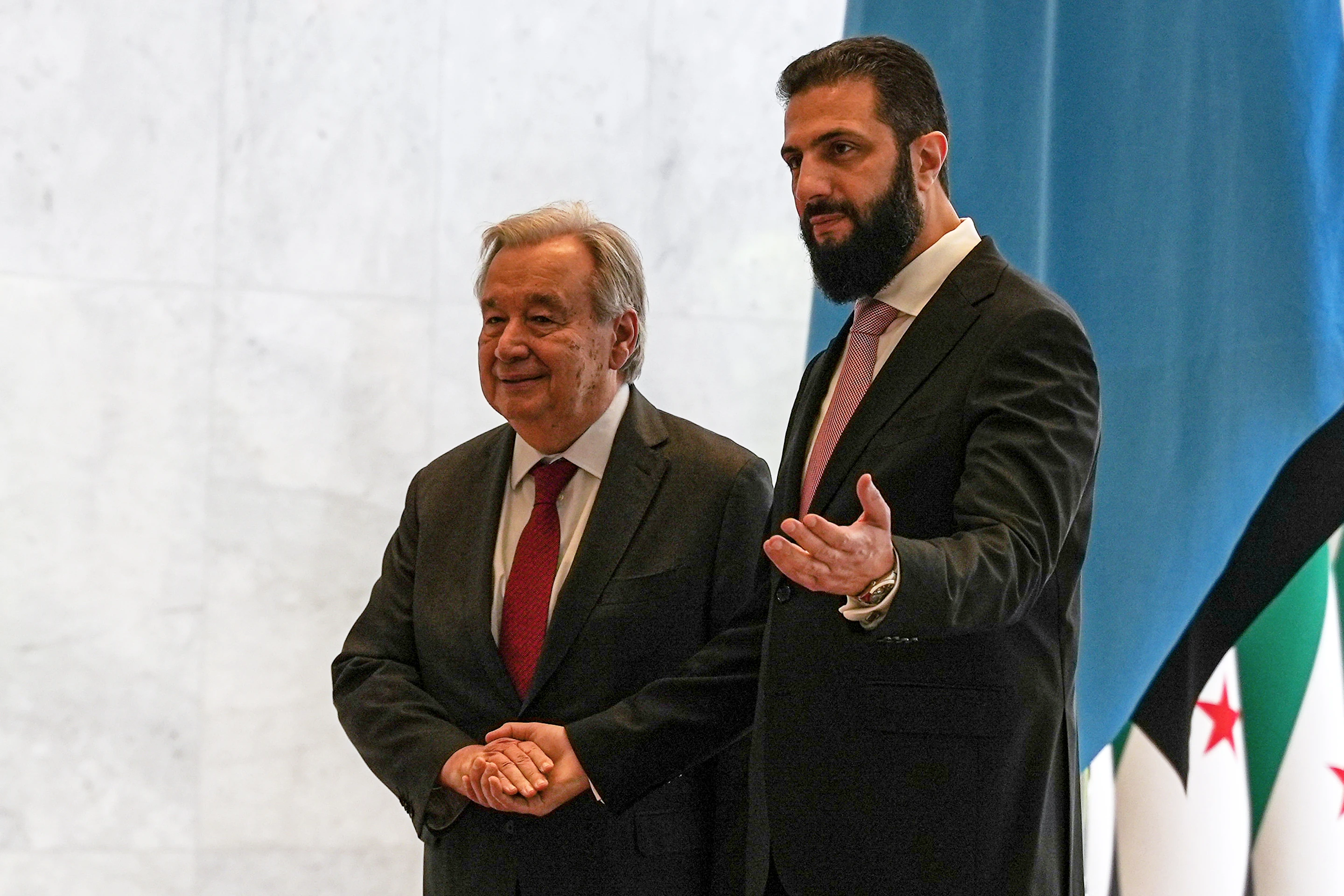
United Nations Secretary-General António Guterres called on the international community to increase support for the Syrian people during a visit to Damascus, emphasizing humanitarian assistance, economic recovery, and renewed efforts toward a lasting political solution after years of conflict.
UN Chief Visits Damascus Amid Recovery Efforts
United Nations Secretary-General António Guterres arrived in Damascus for high-level meetings with Syrian officials and humanitarian organizations, urging the international community not to lose sight of the ongoing challenges facing millions of Syrians. During his visit, Guterres emphasized that although violence has declined in several parts of the country compared with previous years, the humanitarian crisis remains one of the largest in the world. Millions of people continue to require food, medical care, clean water, education, and shelter after more than a decade of conflict. The UN chief stressed that rebuilding Syria requires more than emergency relief, calling for sustained international cooperation aimed at restoring essential infrastructure, reviving economic opportunities, and supporting vulnerable communities. He also met with representatives from UN agencies operating in Syria to review humanitarian programs and assess current needs on the ground. Guterres praised aid workers for continuing to deliver life-saving assistance despite logistical and security challenges while highlighting the importance of ensuring humanitarian access to all regions. He urged donor nations to maintain financial commitments for relief operations and warned against allowing international attention to shift away from the Syrian crisis. The Secretary-General described the Syrian people as demonstrating remarkable resilience despite years of hardship and reiterated that the United Nations remains committed to supporting them through humanitarian assistance, reconstruction efforts, and diplomatic engagement. His visit signals renewed UN efforts to mobilize international backing as Syria continues navigating the difficult path toward recovery and long-term stability.
Call for Greater Humanitarian Support
A central message of the Secretary-General's visit was the urgent need for increased humanitarian assistance to millions of Syrians still affected by conflict, displacement, and economic hardship. According to UN agencies, many families continue struggling to secure adequate food, healthcare, education, and basic services as inflation, unemployment, and damaged infrastructure place additional pressure on daily life. Guterres called on donor governments, international financial institutions, humanitarian organizations, and regional partners to expand funding for relief programs and ensure that aid reaches those most in need without delay. He emphasized that humanitarian assistance should remain impartial and guided solely by the needs of civilians. During meetings with aid agencies, officials discussed efforts to improve food security, strengthen healthcare systems, rebuild schools, and expand access to clean drinking water and sanitation services. The Secretary-General also highlighted the importance of supporting internally displaced people and refugees who continue facing uncertain futures after years of displacement. He praised local humanitarian workers and international organizations that have maintained operations under difficult conditions while urging the global community to provide additional financial and logistical support. Guterres warned that reducing humanitarian funding at this stage could reverse progress achieved in recent years and leave millions of vulnerable people without critical assistance. He reiterated that helping Syrians recover from years of conflict is not only a humanitarian responsibility but also an essential investment in regional peace and long-term stability.
Renewed Push for a Political Solution
Beyond humanitarian concerns, António Guterres stressed that lasting peace in Syria ultimately depends on achieving a comprehensive political solution through dialogue and diplomacy. During discussions with Syrian officials, the Secretary-General reaffirmed the United Nations' commitment to facilitating negotiations aimed at implementing the UN-backed political process. He emphasized that sustainable recovery requires inclusive governance, respect for international law, protection of human rights, and meaningful participation by all segments of Syrian society. Guterres encouraged all stakeholders to engage constructively in efforts to reduce tensions and build confidence after years of conflict. He noted that military developments alone cannot resolve the country's underlying political challenges and called for renewed international support for diplomatic initiatives. UN officials accompanying the visit highlighted the importance of maintaining ceasefire arrangements where possible while promoting reconciliation and community-level peacebuilding efforts. The Secretary-General also reiterated that accountability, justice, and reconciliation will remain important components of any durable peace agreement. International observers believe the visit represents an opportunity to revive diplomatic engagement at a time when regional dynamics continue evolving. While acknowledging that significant obstacles remain, Guterres expressed hope that continued dialogue between Syrian authorities, opposition representatives, regional governments, and international partners could gradually create conditions for greater stability and national recovery. He reaffirmed that the United Nations stands ready to assist all parties committed to pursuing a peaceful and negotiated future for Syria.
Economic Recovery Remains a Major Challenge
The Secretary-General also highlighted the severe economic difficulties confronting Syria, describing recovery as essential for improving living conditions and reducing long-term dependence on humanitarian aid. Years of conflict have damaged infrastructure, disrupted industries, weakened public services, and limited employment opportunities across much of the country. During meetings with economic and humanitarian officials, Guterres discussed the need for investment in rebuilding hospitals, schools, transportation networks, electricity systems, and water infrastructure. He stressed that economic recovery should focus on creating sustainable livelihoods while supporting local businesses and restoring essential services for communities. The UN chief noted that millions of Syrians continue facing rising living costs and limited access to stable employment, making international assistance particularly important during the recovery phase. Humanitarian organizations emphasized that rebuilding infrastructure can improve both economic resilience and access to basic services while encouraging displaced families to return home safely where conditions permit. Guterres called for greater international cooperation to support reconstruction initiatives consistent with international humanitarian principles and legal frameworks. He also underlined the importance of protecting vulnerable populations during economic reforms and ensuring that recovery efforts benefit communities across the country. The Secretary-General concluded that rebuilding Syria's economy will require sustained commitment from national authorities, regional partners, international institutions, and donor countries working together toward long-term development and stability.
International Community Urged to Stay Engaged
Concluding his visit, António Guterres appealed to the international community to maintain its commitment to the Syrian people despite competing global crises. He warned that prolonged humanitarian emergencies risk being overlooked as international attention shifts elsewhere, emphasizing that millions of Syrians continue depending on external assistance for survival and recovery. The Secretary-General encouraged governments, international organizations, development agencies, and financial institutions to strengthen cooperation with the United Nations in addressing Syria's humanitarian, economic, and political challenges. He praised the resilience of Syrian communities while acknowledging the immense difficulties they continue to face after years of conflict. Guterres stated that rebuilding trust, restoring public services, and supporting national recovery will require sustained international engagement over many years. He emphasized that humanitarian assistance, economic development, and diplomatic efforts should complement one another to create lasting progress. The visit concluded with renewed commitments from UN agencies to continue delivering aid, expanding recovery programs, and supporting peace initiatives across the country. While significant challenges remain, the Secretary-General expressed cautious optimism that coordinated international action can help improve conditions for millions of Syrians. He urged world leaders to demonstrate solidarity through continued humanitarian funding, diplomatic cooperation, and long-term investment in peace and development, reaffirming that the future of Syria depends on sustained global support alongside the determination and resilience of its people.