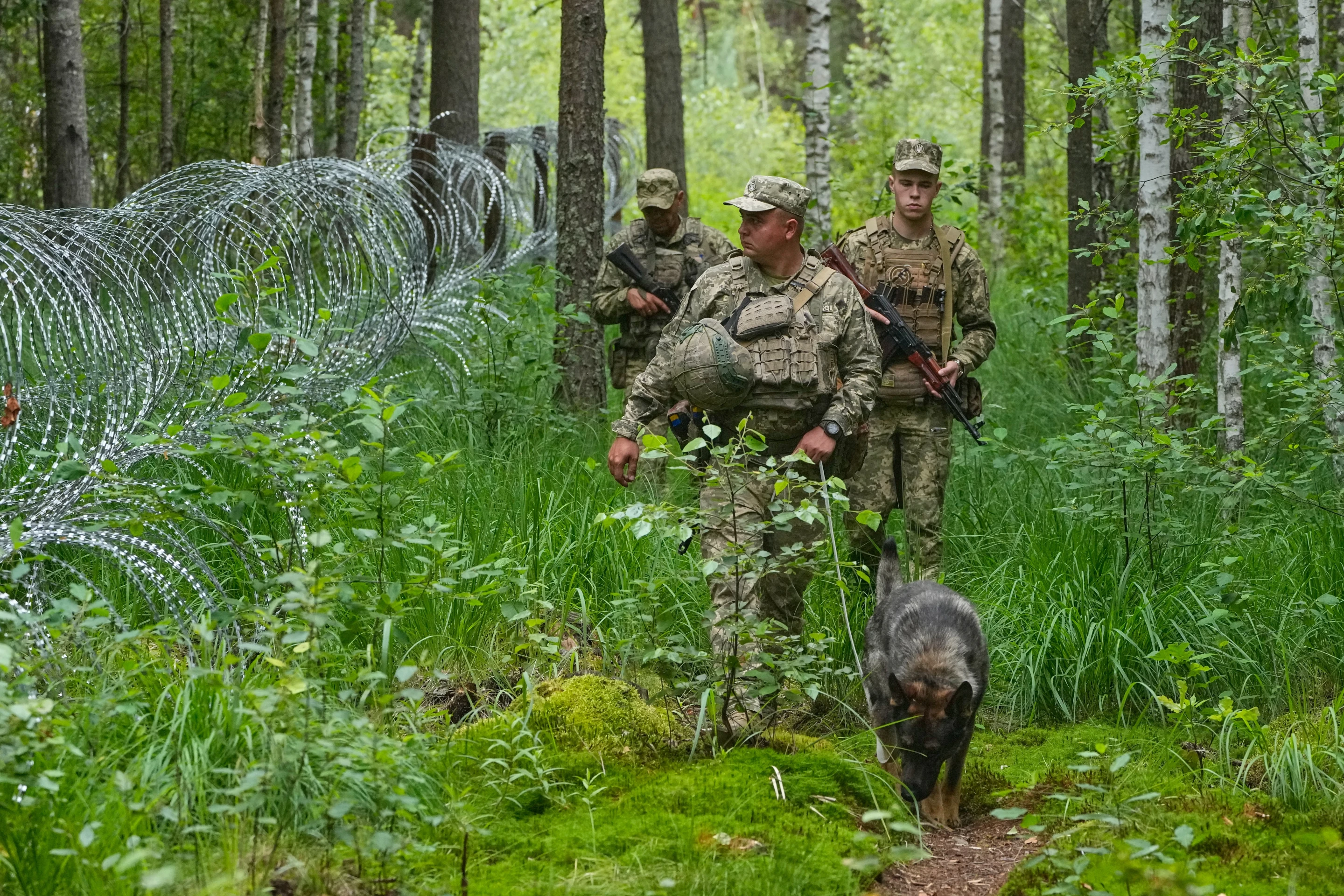
Ukraine continues expanding defensive fortifications along its border with Belarus years after Russian forces launched their full-scale invasion from Belarusian territory, reflecting Kyiv's ongoing focus on border security and military preparedness.
Ukraine Maintains Defensive Focus Along Northern Border
Years after Russia launched its full-scale invasion of Ukraine using Belarusian territory as one of the principal routes of advance, Ukrainian authorities continue reinforcing defensive positions along the country's northern frontier. Military engineers have expanded networks of trenches, anti-vehicle obstacles, surveillance systems, fortified checkpoints, and defensive barriers designed to deter any future cross-border incursion. Officials say the construction effort reflects lessons learned during the early stages of the conflict, when Russian forces rapidly advanced from the north toward Kyiv. While there has been no indication of an imminent offensive from Belarus, Ukrainian military planners maintain that every potential direction of attack must remain adequately defended. The government has described the fortification programme as a long-term investment in national security rather than a temporary wartime measure. Local authorities continue coordinating with the armed forces to improve logistics, transportation routes, and emergency response capabilities in border communities. Officials maintain that strengthening the frontier remains essential to protecting civilian populations and preserving military readiness.
Engineers Expand Layers of Border Defences
Construction teams have continued building multiple layers of defensive infrastructure intended to slow or prevent any potential military advance. The fortification programme includes reinforced trenches, concrete barriers, anti-tank ditches, observation posts, minefields where authorised under military planning, and modern surveillance equipment capable of monitoring activity near the border. Military engineers regularly assess terrain conditions to identify areas requiring additional protection while adapting defensive designs to evolving battlefield experience. Officials stated that engineering projects are being prioritised according to operational assessments conducted by the armed forces. Improvements to roads, bridges, and supply routes have also been incorporated into broader defence planning to ensure troops can be deployed quickly if security conditions change. Defence analysts noted that layered fortifications are intended not only to delay potential attackers but also to provide defenders with stronger positions from which to coordinate military operations. The construction programme remains ongoing as Ukraine continues adapting its national defence strategy to changing regional security conditions.
Belarus Border Remains Strategic Security Concern
The frontier with Belarus continues to hold significant strategic importance for Ukrainian defence planners because of its geographical proximity to Kyiv and its role during the initial stages of Russia's invasion. Military analysts note that the northern border provides direct access to key transportation corridors leading toward central Ukraine, making the region an important consideration in long-term defence planning. Although Belarus has not directly entered the conflict with its own combat forces, its territory has remained an important element of regional security calculations. Ukrainian officials continue closely monitoring military activity across the border while coordinating intelligence assessments with international partners. Defence experts emphasise that maintaining readiness along the northern frontier enables Ukraine to allocate resources more effectively while reducing the likelihood of strategic surprise. Officials stress that the continued fortification effort reflects prudent military planning rather than an assessment that renewed hostilities from the north are imminent.
Communities Adapt to Long-Term Security Measures
Residents living near Ukraine's northern border have gradually adapted to heightened security measures introduced since the beginning of the full-scale war. Increased military patrols, restricted access to certain areas, enhanced surveillance, and expanded emergency preparedness programmes have become part of everyday life in many border communities. Local governments continue working with defence authorities to improve evacuation planning, public communication systems, and civil protection infrastructure. Infrastructure projects supporting both civilian and military needs have also been developed to improve resilience in areas located near the frontier. Community leaders acknowledge that while the additional security measures create practical challenges, they are widely viewed as necessary given the continuing regional security environment. Officials have also prioritised restoring essential public services and supporting local economies affected by years of heightened military activity. The government maintains that protecting border populations remains an important component of its broader national defence strategy.
International Partners Continue Supporting Ukraine
Ukraine's efforts to strengthen its northern border continue alongside broader international assistance provided by allied governments. Defence cooperation has included military equipment, intelligence sharing, engineering expertise, training programmes, and financial support aimed at improving Ukraine's overall defensive capabilities. Security analysts believe international assistance has enabled Ukraine to accelerate infrastructure improvements while modernising aspects of its border surveillance and defence systems. Allied governments have consistently stated that strengthening Ukraine's ability to defend its internationally recognised territory contributes to regional stability and deterrence. Diplomatic discussions also continue regarding long-term security cooperation and reconstruction planning as the conflict evolves. While international support has focused on multiple aspects of Ukraine's defence, officials note that improving border resilience remains an important element of ensuring national security over the long term.
Long-Term Defence Planning Shapes Future Strategy
Ukrainian military planners indicate that border fortifications will remain an integral component of the country's long-term defence strategy even as broader security conditions continue to evolve. Defence officials regularly review battlefield lessons, intelligence assessments, and engineering developments to improve the effectiveness of defensive infrastructure across the country. Analysts note that modern military planning increasingly emphasises layered defence, rapid mobility, advanced surveillance, and resilient infrastructure capable of supporting prolonged security operations. The continued reinforcement of the Belarus border reflects Ukraine's determination to prepare for a wide range of potential security scenarios while avoiding vulnerabilities experienced during the early stages of the conflict. Government officials emphasise that maintaining strong defensive positions contributes both to military preparedness and to public confidence in national security institutions. As regional tensions persist, Ukraine is expected to continue investing in border protection and defence infrastructure while working with international partners to strengthen its overall security posture.