French President Emmanuel Macron convened an emergency crisis meeting after devastating wildfires swept across southern France, forcing more than 250,000 residents and tourists to evacuate. Firefighters continue battling multiple fast-moving blazes amid extreme heat, strong winds, and drought conditions, while authorities warn that the fire danger remains exceptionally high.
Macron Convenes Emergency Crisis Meeting
French President Emmanuel Macron called an emergency government crisis meeting after massive wildfires spread rapidly across several regions of southern France, creating one of the country's most severe wildfire emergencies in recent years. The meeting brought together senior ministers, emergency management officials, military representatives, and regional authorities to coordinate a nationwide response. Officials focused on accelerating evacuation operations, increasing firefighting resources, and ensuring emergency shelters could accommodate the growing number of displaced residents. More than 250,000 people have been ordered to leave their homes, holiday accommodations, and campsites as flames continued advancing through forests and rural communities. Authorities emphasized that public safety remains the government's highest priority, urging residents to follow evacuation instructions without delay. Macron praised firefighters, police officers, medical teams, volunteers, and local officials working around the clock under extremely dangerous conditions. Additional aerial firefighting aircraft and military support have been deployed to strengthen containment efforts as weather forecasts indicate continued high temperatures and powerful winds capable of spreading flames rapidly. Government agencies are also coordinating with neighboring European countries for additional emergency assistance if required. Officials warned that changing wind patterns could quickly alter the direction of the fires, making the situation highly unpredictable. Crisis centers remain active twenty-four hours a day to monitor developments and distribute updated safety information. The French government has pledged financial assistance for affected communities and announced plans to assess infrastructure damage once the fires are brought under control. Authorities continue urging the public to avoid travel into affected areas, conserve emergency communication networks, and remain alert for official evacuation notices as firefighting operations continue across multiple regions.
Wildfires Force Mass Evacuations
The rapidly expanding wildfires have triggered one of France's largest evacuation efforts in recent memory, forcing more than 250,000 residents, tourists, and seasonal workers to flee threatened communities. Emergency officials have established temporary shelters in schools, sports arenas, community centers, and municipal buildings to accommodate displaced families. Thousands of emergency personnel have been deployed to assist vulnerable residents, including elderly individuals, hospital patients, and people with limited mobility. Police officers have conducted door-to-door notifications in several towns where fire conditions deteriorated within hours due to shifting winds. Major highways have experienced significant congestion as evacuation traffic combined with road closures near active fire zones. Rail services in some affected areas have also been suspended to protect passenger safety and allow emergency vehicles unrestricted access. Popular holiday destinations have been evacuated as campsites, hotels, and vacation rentals faced immediate wildfire threats. Local businesses have temporarily closed while agricultural operations suffered significant disruptions as farmers rushed to relocate livestock and protect equipment. Authorities stressed that returning home before official clearance could place both civilians and rescue personnel at unnecessary risk. Emergency medical teams continue treating people for smoke inhalation, dehydration, and heat-related illnesses as temperatures remain exceptionally high. Volunteers and humanitarian organizations are providing food, water, blankets, hygiene supplies, and psychological support for displaced residents. Government officials expect some evacuation orders to remain in place until firefighters can establish secure containment lines and weather conditions improve sufficiently to reduce the immediate threat posed by the advancing wildfires.
Firefighters Battle Extreme Conditions
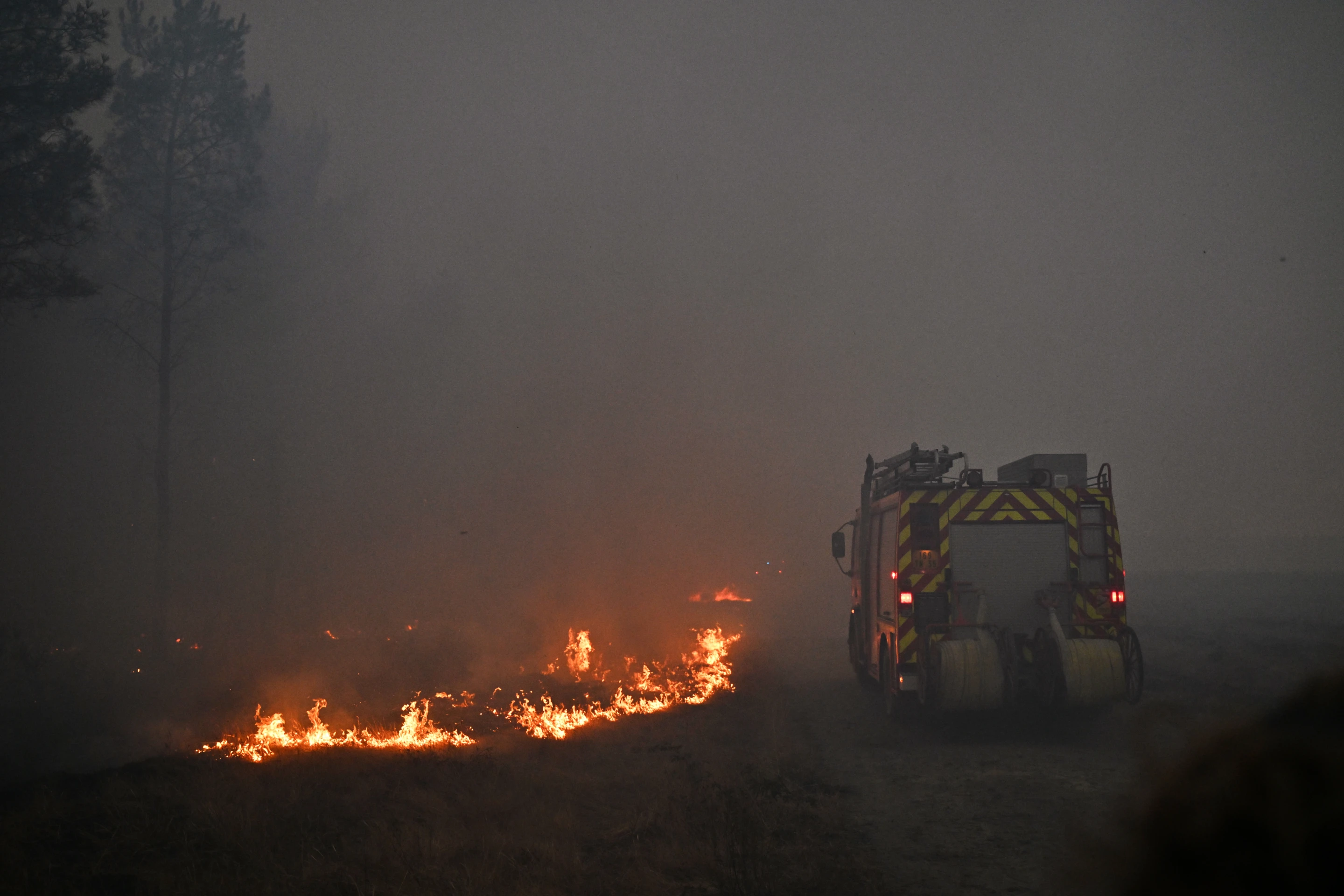
Thousands of firefighters are working continuously to contain multiple wildfire fronts despite facing extremely challenging weather conditions. Strong winds, exceptionally dry vegetation, and prolonged heatwaves have significantly increased fire intensity, allowing flames to spread rapidly across forests, hillsides, and agricultural land. Fire crews are using helicopters, water-dropping aircraft, bulldozers, and specialized wildfire equipment to establish containment lines and protect populated communities. Emergency responders have prioritized defending homes, hospitals, schools, power infrastructure, and transportation routes while attempting to prevent separate fires from merging into even larger fire complexes. Nighttime operations have continued without interruption as firefighters take advantage of slightly cooler temperatures to strengthen containment efforts. However, officials acknowledged that unpredictable wind changes have repeatedly undermined progress, forcing crews to reposition and adapt their strategies. Smoke from the fires has reduced visibility across large areas, complicating both aerial operations and road travel. Several firefighters have reportedly received treatment for exhaustion and minor injuries after working extended shifts in dangerous conditions. Authorities have rotated emergency crews to reduce fatigue while requesting reinforcements from other French regions. International cooperation mechanisms have also been activated to ensure additional firefighting aircraft and personnel can be deployed if the emergency continues to escalate. Meteorologists warned that forecasts indicate little immediate relief, with continued hot, dry weather expected to sustain elevated wildfire risks. Officials continue urging residents to avoid starting outdoor fires, comply with local restrictions, and immediately report any new signs of smoke or flames to emergency services.
Communities Face Widespread Damage
The advancing wildfires have caused extensive destruction across numerous communities, damaging homes, farms, forests, vineyards, tourism facilities, and public infrastructure. Preliminary assessments indicate that thousands of hectares of woodland and agricultural land have already been burned, with environmental experts warning that recovery could take decades. Local authorities reported significant damage to power lines, telecommunications networks, and rural roads, complicating emergency response efforts and limiting access to isolated communities. Farmers have suffered substantial losses after crops, grazing land, and livestock facilities were destroyed by rapidly advancing flames. Tourism businesses, particularly hotels, campsites, restaurants, and outdoor recreation operators, have experienced widespread cancellations during what is normally one of the busiest travel periods of the year. Environmental agencies expressed concern about long-term impacts on wildlife habitats, biodiversity, and water quality as burned landscapes become increasingly vulnerable to soil erosion and flooding following future rainfall. Schools, municipal buildings, and sports centers have been transformed into emergency shelters to support displaced residents. Insurance companies have begun preparing for what could become one of the country's costliest natural disaster events in recent years, although comprehensive damage estimates remain unavailable while firefighting operations continue. Government officials pledged that reconstruction assistance would be provided to affected communities once immediate dangers subside. Local leaders emphasized that recovery will require coordinated support from national authorities, humanitarian organizations, and private sector partners. Residents returning after evacuation orders are lifted may face extensive cleanup efforts before damaged neighborhoods can safely resume normal daily activities.
Climate Concerns Intensify Across Europe
The devastating wildfires have renewed debate across Europe about the growing frequency and intensity of extreme weather events linked to rising global temperatures. Climate scientists have repeatedly warned that prolonged heatwaves, severe drought conditions, and stronger wildfire seasons are becoming increasingly common throughout southern Europe. French authorities noted that exceptionally high temperatures combined with months of below-average rainfall created ideal conditions for explosive wildfire growth. Similar emergencies have affected several Mediterranean countries in recent years, prompting governments to expand investment in firefighting capabilities, early warning systems, forest management, and climate adaptation strategies. Environmental experts argue that reducing wildfire risks will require not only stronger emergency response capabilities but also long-term planning that addresses land management, vegetation control, infrastructure resilience, and greenhouse gas emissions. European Union institutions continue supporting cross-border cooperation through shared firefighting aircraft, emergency personnel, and disaster response mechanisms designed to assist member states during large-scale natural disasters. Public health officials also warned that prolonged exposure to wildfire smoke can increase respiratory illnesses, particularly among children, older adults, and individuals with existing medical conditions. Authorities encouraged residents in affected areas to remain indoors whenever possible, use protective masks when necessary, and closely monitor official health advisories. While immediate priorities remain focused on saving lives and containing active fires, policymakers are expected to examine broader strategies aimed at improving resilience against future climate-related disasters. Experts believe the current wildfire emergency highlights the increasing importance of coordinated European preparedness as extreme weather events continue affecting communities across the continent.
Recovery Efforts Begin as Fires Continue
Although emergency crews remain focused on suppressing active wildfires, French authorities have already begun planning for the long-term recovery process. Government agencies are coordinating with regional administrations to assess housing damage, restore essential public services, and provide financial assistance for displaced residents and affected businesses. Engineers will inspect roads, bridges, electrical networks, water systems, and public buildings before evacuated communities are permitted to return. Social service organizations are preparing programs to support families who have lost homes or experienced significant emotional trauma during the evacuations. Agricultural officials are also evaluating damage to vineyards, orchards, livestock operations, and rural enterprises that play a critical role in local economies. Environmental restoration initiatives are expected to include reforestation projects, erosion control measures, habitat rehabilitation, and long-term monitoring of affected ecosystems. Insurance providers have established emergency claims centers to help property owners begin documenting losses while government compensation programs are being finalized. President Macron reaffirmed that national resources would remain available for as long as necessary to support impacted regions through both emergency response and reconstruction phases. Officials cautioned that rebuilding damaged communities will require sustained cooperation between local governments, national agencies, private organizations, and European partners. Meanwhile, firefighters continue battling remaining hotspots to prevent renewed flare-ups as weather conditions remain volatile. Authorities emphasized that public safety restrictions will remain in effect until specialists determine that affected areas are secure. Residents have been encouraged to remain patient, follow official guidance, and prepare for a gradual return as recovery operations progress alongside ongoing firefighting efforts.