Russian missile and drone attacks killed two civilians in Ukraine, while Ukrainian drone strikes reportedly killed four people in Russian-occupied territory, underscoring the escalating cross-border conflict as both sides intensify aerial assaults.
Russian Strikes Kill Two Across Ukraine
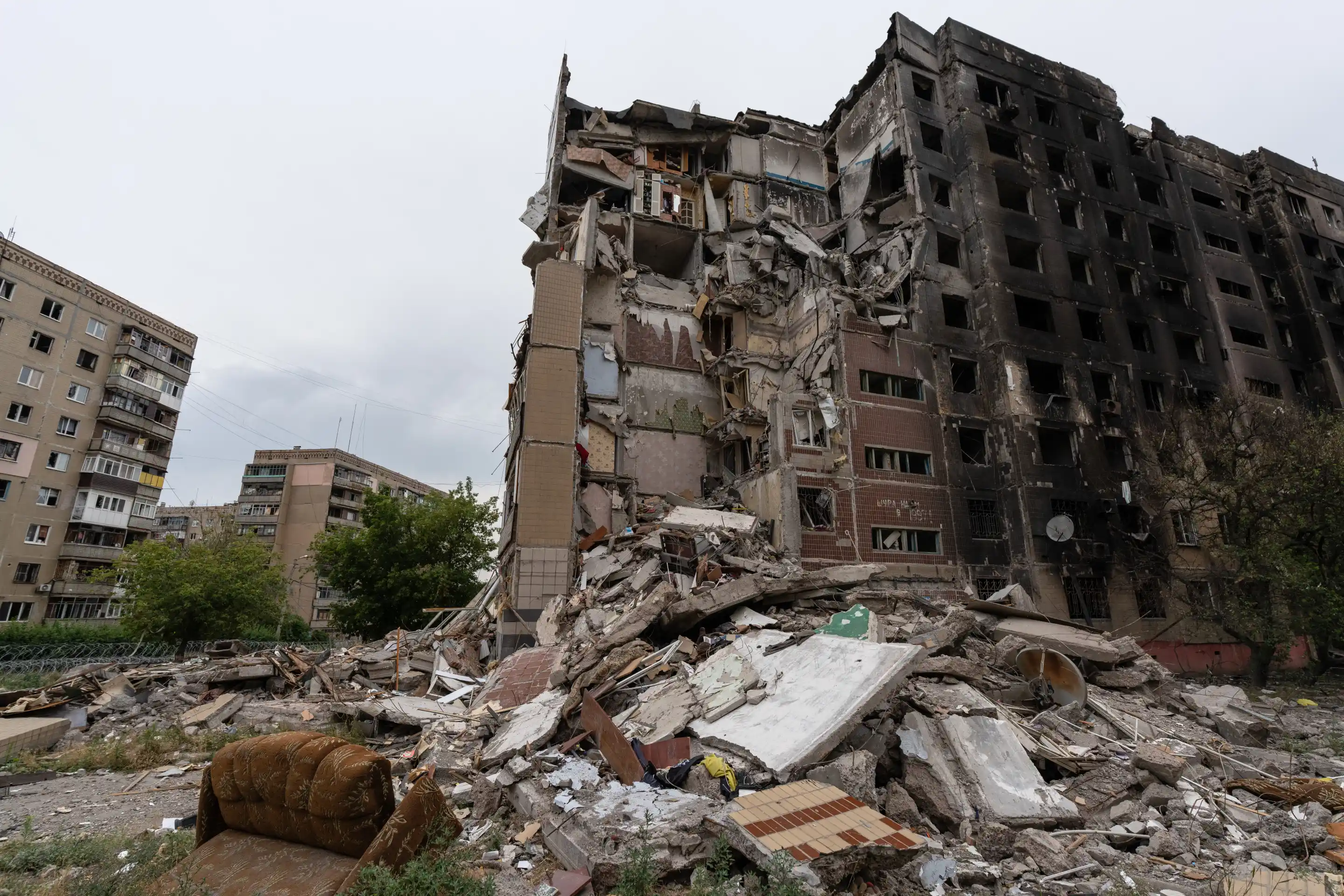
Russia launched another wave of missile and drone attacks across Ukraine overnight, killing at least two civilians and injuring several others as cities remained under repeated air-raid alerts. Ukrainian officials said the attacks targeted residential neighborhoods and civilian infrastructure in multiple regions, including Kyiv, Kharkiv, and Zaporizhzhia. In the capital, ballistic missiles triggered explosions and fires, damaging apartment buildings and commercial properties while emergency crews rushed to rescue residents trapped inside damaged structures. Air defense systems intercepted several incoming missiles and drones, but falling debris still caused destruction in populated districts. Local authorities reported that firefighters spent hours extinguishing blazes caused by the strikes, while medical teams treated civilians suffering from blast injuries and smoke inhalation. President Volodymyr Zelenskyy condemned the attacks as deliberate strikes against civilian areas and renewed calls for additional Western air-defense systems capable of intercepting advanced ballistic missiles. Military officials warned that Russia continues to combine missile barrages with large-scale drone attacks in an effort to overwhelm Ukrainian defenses. Public transportation services experienced temporary disruptions, and emergency shelters remained open as additional air-raid warnings were issued throughout the day. Officials urged residents to remain vigilant and immediately seek shelter whenever warning sirens sound. The latest attacks highlight Russia's continued reliance on long-range aerial strikes despite Ukraine's improving air-defense capabilities. Authorities are continuing damage assessments while restoration crews work to repair electricity, communications, and other essential infrastructure affected by the overnight bombardment.
Ukrainian Drone Strike Hits Russian-Held Territory
At the same time, officials installed by Russia in occupied eastern Ukraine reported that Ukrainian drone attacks killed four civilians in the Russian-controlled city of Horlivka. According to occupation authorities, multiple drones struck residential and commercial areas, causing casualties and damaging nearby buildings. Emergency responders were dispatched to evacuate residents, extinguish fires, and search for additional victims beneath damaged structures. Ukrainian officials did not immediately comment on the reported casualties, consistent with their usual policy regarding operations inside Russian-controlled territory. Throughout the war, Ukraine has increasingly relied on long-range drones to target military logistics, ammunition depots, fuel facilities, command centers, and transportation networks supporting Russian forces. Kyiv has argued that such operations are intended to weaken Russia's military capabilities rather than deliberately target civilians. Russian officials, however, condemned the latest attack as an act of terrorism and accused Ukraine of intentionally striking populated areas. Independent verification of battlefield claims from either side remains difficult because journalists and international observers have limited access to active combat zones and occupied territories. The reported drone strike forms part of a broader Ukrainian campaign that has expanded in both range and frequency during recent months, reaching deeper into Russian-controlled areas and increasingly targeting infrastructure viewed as strategically important for Moscow's military operations.
Escalating Drone Warfare on Both Sides
The latest exchange of attacks illustrates how drone warfare has become one of the defining characteristics of the conflict. Russia has continued deploying large numbers of Shahed-type attack drones alongside cruise and ballistic missiles in coordinated assaults designed to exhaust Ukrainian air-defense systems. Ukraine, meanwhile, has expanded its domestic drone production and increasingly launched long-range unmanned aircraft against military targets, fuel depots, airfields, and logistical hubs inside Russian-controlled territory and Russia itself. Military analysts say drones offer both countries relatively inexpensive yet highly effective tools capable of disrupting supply lines, damaging infrastructure, and forcing opponents to allocate significant resources toward air defense. The rapid pace of technological innovation has transformed battlefield tactics, with both sides regularly introducing upgraded drones featuring longer ranges, improved navigation systems, and greater resistance to electronic warfare. Air-defense operators are now required to respond to simultaneous threats involving drones, missiles, and decoys launched in coordinated waves. Western intelligence agencies have noted that aerial attacks have become increasingly frequent during recent months as both militaries seek strategic advantages before potential future diplomatic negotiations. Civilian populations continue bearing much of the burden as attacks repeatedly damage homes, schools, hospitals, transportation networks, and energy infrastructure. Experts believe the continuing evolution of drone technology will remain a major factor shaping military operations throughout the conflict.
Civilian Infrastructure Under Continued Pressure
Beyond the immediate casualties, repeated aerial attacks continue placing enormous pressure on civilian infrastructure across Ukraine. Electricity networks, water systems, transportation routes, healthcare facilities, and residential neighborhoods have all experienced recurring damage since the conflict began. Utility companies often work around the clock to restore power and essential services following missile strikes, while local governments maintain emergency shelters and backup power supplies in anticipation of future attacks. Schools and hospitals have also strengthened protective measures, including reinforced shelters and emergency evacuation procedures, to reduce risks during air raids. Humanitarian organizations warn that repeated attacks on civilian infrastructure contribute to long-term economic hardship by disrupting businesses, forcing temporary closures, and delaying reconstruction projects. In occupied territories, civilians similarly face ongoing risks from military operations, with communities experiencing uncertainty as front-line conditions shift and aerial attacks become increasingly common. International humanitarian agencies continue providing emergency assistance, medical supplies, and psychological support to families affected by repeated bombardments. Reconstruction efforts in previously damaged areas frequently face setbacks whenever new attacks occur. Officials argue that sustained international assistance remains essential for helping affected communities maintain essential public services while responding to continuing security threats. As both sides intensify long-range strike capabilities, protecting civilian infrastructure has become one of the most urgent humanitarian challenges of the war.
Conflict Shows No Immediate Signs of Easing
The latest attacks come as diplomatic efforts to reduce hostilities continue facing significant obstacles. Despite periodic discussions involving international mediators and Western governments, fighting remains intense across multiple sections of the front line while long-range missile and drone attacks continue targeting locations far from active ground combat. Ukrainian officials maintain that continued military assistance from international partners remains essential for defending cities and protecting civilians, while Russia has shown no indication of reducing its aerial campaign. Security analysts believe both sides are attempting to strengthen their positions before any future negotiations by maintaining military pressure through sustained long-range attacks. Meanwhile, neighboring countries remain alert for potential airspace violations involving drones and missiles, highlighting broader regional security concerns. Humanitarian organizations continue urging all parties to respect international humanitarian law and minimize civilian harm during military operations. The United Nations has repeatedly expressed concern over rising civilian casualties and renewed calls for the protection of noncombatants and critical infrastructure. With aerial warfare intensifying and both militaries expanding their drone capabilities, observers warn that the conflict is entering another phase in which long-range strikes may become even more frequent. For civilians living on both sides of the front line, the latest attacks serve as another reminder that the war continues to exact a heavy human and humanitarian toll with no immediate end in sight.