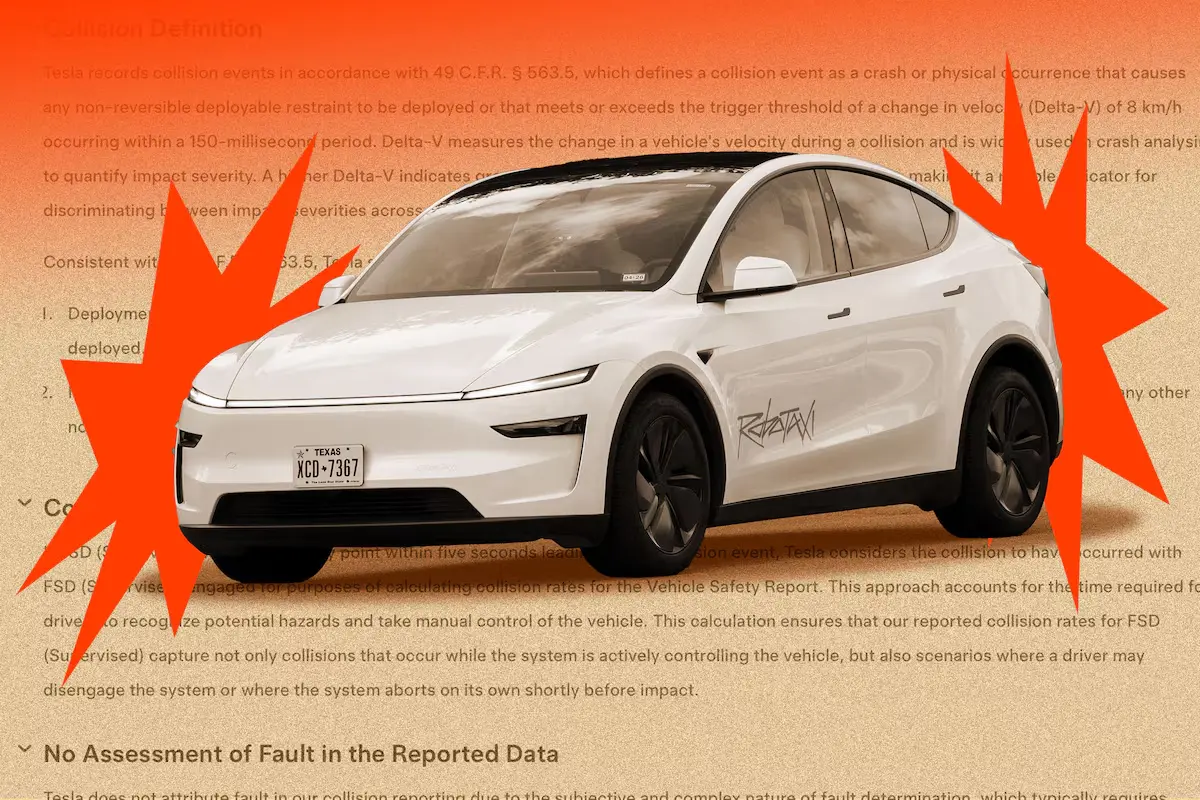
A Reuters investigation found that many Tesla AI trainers responsible for improving the company's Full Self-Driving system avoid using the technology themselves and question the reliability of Tesla's publicly reported safety statistics. ([reuters.com](https://www.reuters.com/world/us/why-teslas-ai-trainers-dont-trust-its-self-driving-tech-or-its-safety-stats-2026-07-29/?utm_source=chatgpt.com))
Employees Training Tesla's AI Express Private Concerns
Many of the employees responsible for helping train Tesla's artificial intelligence systems have privately expressed reservations about using the company's Full Self-Driving (FSD) technology in their own vehicles, according to a Reuters investigation. These AI trainers spend their days reviewing thousands of driving videos, identifying system errors, and labelling complex traffic situations to improve Tesla's autonomous driving software. Despite their direct involvement in developing the technology, several current and former workers told Reuters they remain uncomfortable relying on FSD during everyday driving. ([reuters.com](https://www.reuters.com/world/us/why-teslas-ai-trainers-dont-trust-its-self-driving-tech-or-its-safety-stats-2026-07-29/?utm_source=chatgpt.com)) The employees described encountering situations where the software made unexpected decisions, including sudden braking, incorrect lane positioning, hesitation at intersections, and difficulty interpreting unusual road conditions. Although drivers are instructed to remain attentive and ready to intervene at all times, some workers questioned whether average consumers consistently understand those responsibilities. Tesla has repeatedly stated that Full Self-Driving remains a supervised driver-assistance system rather than a fully autonomous vehicle. The company continues to emphasize that drivers must keep their hands available to take control whenever necessary. The investigation offers a rare look inside Tesla's AI development process through interviews with individuals directly involved in training the company's neural-network models.
Questions Raised About Tesla's Published Safety Statistics
Reuters also reported that some AI trainers questioned how Tesla presents safety data comparing vehicles using Autopilot or Full Self-Driving with manually driven vehicles. Employees said they believed certain statistics could be misunderstood because they compare driving under different road conditions rather than identical scenarios. ([reuters.com](https://www.reuters.com/world/us/why-teslas-ai-trainers-dont-trust-its-self-driving-tech-or-its-safety-stats-2026-07-29/?utm_source=chatgpt.com)) Tesla regularly publishes quarterly safety reports showing fewer crashes per mile for vehicles operating with Autopilot engaged than for vehicles driven without the system. However, transportation researchers have long noted that Autopilot is used primarily on controlled-access highways, which generally experience lower crash rates than urban streets regardless of automation. Several independent experts interviewed by Reuters said publicly available data makes it difficult to determine precisely how much of Tesla's reported safety advantage results from the software itself versus differences in driving environments, traffic density, weather conditions, and driver behaviour. Tesla maintains that its safety reports accurately reflect observed driving performance and demonstrate the benefits of its advanced driver-assistance technologies.
Training the AI Requires Reviewing Millions of Driving Events
Tesla's AI trainers play a central role in improving the company's autonomous driving systems. Their work involves reviewing video captured by customer vehicles, identifying objects, road markings, traffic signals, pedestrians, cyclists, and unusual driving situations so that Tesla's neural networks can learn to interpret real-world environments more accurately. Employees interviewed by Reuters described analysing countless edge cases—rare scenarios that autonomous systems may encounter only infrequently but must nevertheless handle safely. Examples include construction zones, emergency vehicles, unusual weather, temporary road markings, and unpredictable pedestrian behaviour. The trainers explained that improving artificial intelligence requires enormous quantities of accurately labelled data, with even small annotation errors potentially affecting future software performance. While they acknowledged significant progress in Tesla's technology over recent years, some employees said they continued observing mistakes during internal testing that reinforced their personal caution when using Full Self-Driving. Artificial intelligence experts note that edge cases remain among the greatest technical challenges facing autonomous vehicle development because real-world driving environments are extraordinarily diverse and constantly changing.
Autonomous Driving Faces Ongoing Regulatory Scrutiny
Tesla's driver-assistance technology has remained under close examination by regulators in the United States and abroad. The National Highway Traffic Safety Administration (NHTSA) has conducted multiple investigations into crashes involving Autopilot and Full Self-Driving, while federal safety officials continue evaluating software updates and driver monitoring systems. Transportation safety experts generally agree that advanced driver-assistance systems can improve road safety when used correctly, but they caution that overconfidence in partially automated technologies may encourage drivers to become less attentive. Maintaining clear communication regarding system capabilities and limitations remains a major challenge across the automotive industry. Tesla argues that its camera-based artificial intelligence approach represents the future of autonomous driving and continues investing heavily in neural-network training, custom AI hardware, and large-scale data collection. The company believes software improvements delivered through over-the-air updates will steadily increase vehicle performance. Meanwhile, competitors continue pursuing alternative strategies that combine cameras with radar, lidar, or high-definition mapping to enhance environmental awareness.
Trust Remains Central to Tesla's Autonomous Driving Ambitions
The Reuters investigation highlights a broader issue confronting the autonomous vehicle industry: public confidence depends not only on technological capability but also on transparency regarding system performance and safety. Interviews with Tesla AI trainers suggest that even individuals closely involved in developing the software continue exercising caution when deciding whether to rely on advanced driver-assistance features. ([reuters.com](https://www.reuters.com/world/us/why-teslas-ai-trainers-dont-trust-its-self-driving-tech-or-its-safety-stats-2026-07-29/?utm_source=chatgpt.com)) Tesla has consistently maintained that its vehicles become safer as more real-world driving data is incorporated into successive software updates. Company executives have argued that large-scale fleet learning provides a competitive advantage unmatched by traditional automakers. Industry analysts believe the success of autonomous driving will ultimately depend on demonstrating consistent safety improvements across diverse driving environments while earning the trust of regulators, consumers, and transportation experts. Independent verification of performance data, clearer reporting standards, and continued technological advancement are expected to play important roles as autonomous vehicle deployment expands. As competition in artificial intelligence accelerates throughout the automotive sector, questions surrounding safety, transparency, and public trust are likely to remain central to the future of self-driving transportation.