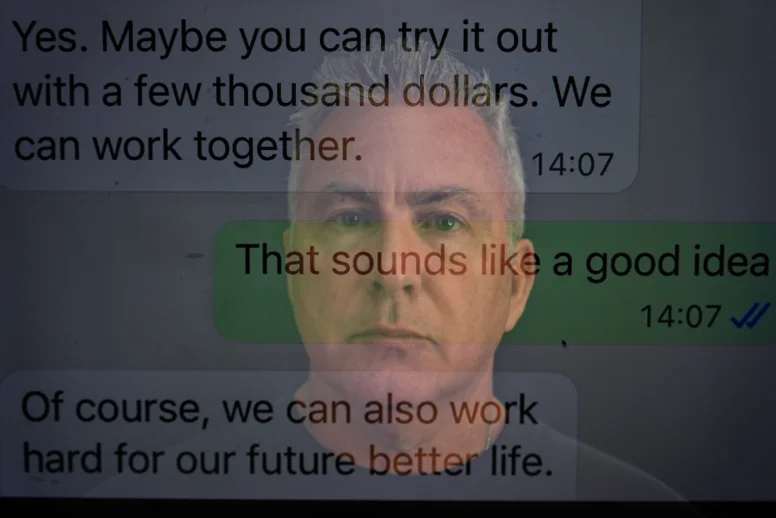
A photo essay explores the lives of two people caught on opposite sides of the global scam industry — one exploited as a victim of online fraud and another forced into scam operations — as they attempt to recover and rebuild after exploitation.
Two Lives Connected by a Global Web of Fraud
A global investigation into online scam networks reveals the human stories behind one of the fastest-growing forms of digital crime. The industry has created victims on both sides: people who lose their money and trust to fraudsters, and individuals who are themselves exploited into carrying out scams. Through photographs and personal accounts, this photo essay follows two individuals whose lives were transformed by the global scam economy. One was targeted through an elaborate online deception that caused financial and emotional damage. The other became trapped inside a criminal operation where workers were pressured to deceive strangers. Their stories reveal the complexity of a criminal ecosystem that operates across borders, combining technology, psychological manipulation and organized networks to generate billions of dollars in illicit profits. Experts say understanding both sides of the industry is essential because many scam operations rely on exploiting vulnerable people at every stage of the process.
The Victim: Trust Turned Into Financial Loss
One of the individuals featured in the investigation described how an online relationship gradually became a financial nightmare. What began as a seemingly genuine connection developed into a carefully designed scam involving emotional manipulation and false promises. The scammer built trust over time, creating a sense of companionship before introducing financial requests. By the time warning signs appeared, the victim had already developed a strong emotional attachment. Fraud investigators say this pattern is common in romance and investment scams. Criminals often avoid immediate demands and instead focus on creating psychological dependence. The financial loss was only part of the damage. Victims frequently report feelings of shame, isolation and difficulty trusting others after discovering that a relationship they believed was real was fabricated.
The Worker: Forced Into the Scam Industry
On the other side of the scam operation are workers who are often recruited through false job advertisements and then trapped in controlled environments. Some individuals report being threatened, monitored and forced to participate in online fraud campaigns. Investigators have documented cases where people are transported across borders and pressured to operate fake social media accounts, communicate with targets and follow scripts designed to extract money. Many workers involved in these operations are not the architects of the crimes but are themselves victims of exploitation. Human trafficking experts say criminal organizations often use economic hardship and deception to recruit vulnerable individuals. Escaping these operations can be extremely difficult because victims may face threats, legal uncertainty and fear of retaliation from criminal networks.
Technology Fuels a Worldwide Scam Economy
The global scam industry has expanded rapidly with the help of digital platforms, messaging applications and online financial systems. Criminal groups use technology to reach victims worldwide while maintaining operations across multiple countries. Artificial intelligence tools, fake identities and automated communication systems have made scams more convincing and easier to scale. Criminal networks can now manage thousands of conversations while adapting messages to individual targets. Law enforcement agencies say these operations often involve complex international networks that include recruiters, financial handlers, technical specialists and money laundering channels. The challenge for investigators is not only identifying scammers but also dismantling the broader systems that allow fraud operations to continue.
Rebuilding After Exploitation and Trauma
Both individuals featured in the photo essay are working to rebuild their lives after experiences that changed their understanding of trust, technology and human relationships. Recovery can involve financial challenges, emotional healing and reconnecting with communities. Support organizations say victims on both sides of scam networks often need assistance because exploitation can leave long-lasting psychological effects. Experts emphasize that prevention requires more than warning people about scams. It also requires addressing the economic conditions that allow criminal groups to recruit vulnerable workers and exploit people seeking opportunities. The stories of these two survivors demonstrate that the global scam industry is not simply a digital crime problem — it is a human exploitation crisis affecting people across borders.
A Growing Global Challenge for Authorities
Governments, technology companies and law enforcement agencies are increasing efforts to combat international scam networks. Measures include improving online fraud detection, tracking financial transfers and investigating trafficking linked to scam operations. However, experts say criminal groups continue to adapt quickly, moving operations between countries and adopting new technologies to avoid detection. The experiences of scam victims highlight the need for stronger cooperation between governments and greater public awareness about online manipulation techniques. As the global fight against digital fraud continues, investigators say the most important lesson is recognizing that every scam involves real people — both those targeted and those exploited within the criminal system itself.