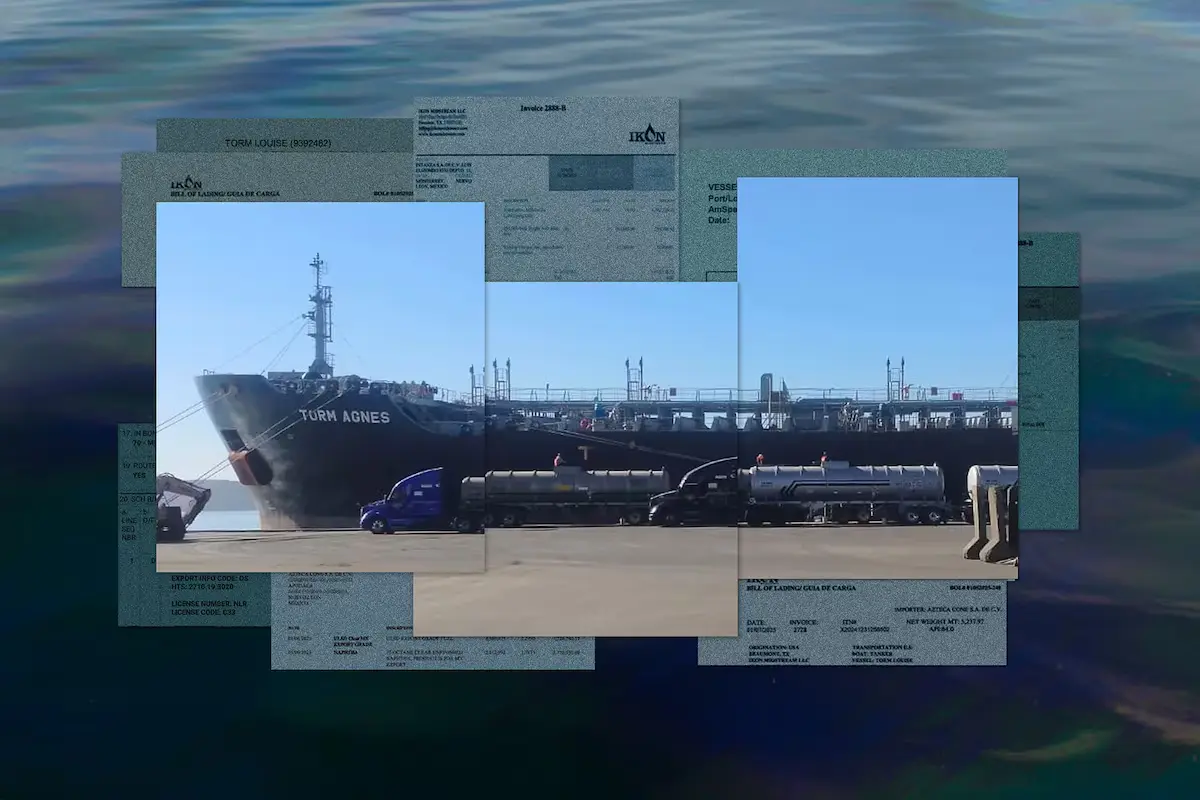
A Reuters investigation traced shipping records, customs declarations and corporate documents that linked a U.S.-based fuel trader to petroleum shipments moving through a fuel-smuggling network allegedly controlled by Mexico's Jalisco New Generation Cartel (CJNG).
Documents Reveal Links Between Fuel Shipments and Cartel-Controlled Networks
A months-long Reuters investigation uncovered documentary evidence connecting a U.S. fuel trader, Ikon Midstream, to petroleum shipments that ultimately entered a sophisticated fuel-smuggling network linked to Mexico's Jalisco New Generation Cartel (CJNG). The investigation analysed customs declarations, shipping manifests, export records, corporate filings and interviews with current and former officials to reconstruct how refined petroleum products moved from the United States into Mexico through companies later tied to organised crime. According to Reuters, Ikon Midstream supplied several cargoes destined for Mexico through commercial transactions that, on paper, appeared legitimate. However, export documentation reviewed during the investigation showed repeated discrepancies involving customer identities, customs classifications and import permits. Some shipments were reportedly declared under tariff codes for lubricants or other petroleum products that carried lower taxes than diesel or gasoline. Mexican authorities have identified fuel smuggling—known locally as 'huachicol fiscal'—as one of the country's fastest-growing organised crime businesses. By avoiding fuel taxes and exploiting weaknesses in customs oversight, criminal organisations can generate enormous profits while undercutting legitimate fuel distributors. Reuters reported that the investigation does not conclude that Ikon Midstream knowingly conducted business with CJNG. The company has denied knowingly supplying criminal organisations and stated that it follows applicable U.S. laws and compliance procedures.
Missing Permits and Inconsistent Paperwork Raised Red Flags
The Reuters investigation found multiple inconsistencies across shipping documentation associated with fuel exports to Mexico. Some customer information could not be independently verified, import permits appeared incomplete or missing, and customs declarations classified cargoes in ways that differed from their commercial descriptions. These discrepancies prompted questions about whether intermediaries within the supply chain had altered documentation after fuel left U.S. exporters. Investigators found that several Mexican companies receiving the shipments either had limited publicly available business records, shared addresses with unrelated businesses, or appeared to have little evidence of large-scale fuel operations. Such characteristics are commonly viewed by financial crime investigators as potential indicators requiring additional scrutiny, although they are not, by themselves, proof of criminal conduct. Trade experts interviewed by Reuters explained that international petroleum supply chains frequently involve multiple brokers, freight forwarders, storage operators and distributors before cargo reaches its final destination. This complexity can make it difficult for exporters to determine who ultimately controls imported fuel. The investigation also highlighted how falsified customs documentation has become a common technique used by criminal organisations seeking to avoid excise taxes while disguising the true nature of petroleum imports entering Mexico.
Fuel Smuggling Has Become a Major Revenue Source for CJNG
Authorities in both the United States and Mexico say fuel smuggling has evolved into one of the largest sources of income for the Jalisco New Generation Cartel, rivalled only by narcotics trafficking. Rather than relying solely on stolen fuel siphoned from pipelines, investigators say criminal groups increasingly import refined petroleum products from the United States using fraudulent customs declarations and shell companies. Once inside Mexico, the fuel can be sold through cartel-controlled petrol stations, wholesale distributors or informal roadside vendors. By avoiding Mexico's fuel excise tax, smugglers generate substantial profit margins while selling products below legitimate market prices. U.S. Treasury officials announced sanctions in July 2026 targeting individuals and companies allegedly involved in one such network linked to CJNG. The sanctions described an international scheme involving logistics companies, financial intermediaries and front businesses that helped transport and conceal fuel shipments moving across the border. Officials believe these operations generate hundreds of millions of dollars annually, providing organised crime groups with significant financial resources that extend beyond traditional drug trafficking activities.
International Investigations Continue Expanding
The Reuters findings have become part of broader investigations by U.S. and Mexican authorities examining fuel-smuggling operations involving ports, customs agencies and private-sector logistics providers. Mexican authorities have expanded internal investigations into several major seaports while reviewing customs procedures designed to detect fraudulent fuel imports. Financial regulators have also increased scrutiny of cross-border petroleum transactions. In addition to sanctions, U.S. authorities issued updated guidance encouraging banks and financial institutions to monitor unusual payment patterns, shell companies and trade documentation associated with fuel imports into Mexico. Experts note that investigations into complex international trade networks often require cooperation among customs agencies, financial intelligence units, prosecutors and maritime authorities across multiple jurisdictions. Even when suspicious documentation is identified, establishing criminal responsibility may require proving that participants knowingly facilitated illegal activity. Several companies mentioned in the Reuters investigation denied knowingly participating in any cartel-linked operations and stated that they comply with applicable laws governing international petroleum trade.
Paper Records Illustrate the Complexity of Modern Financial Crime
The investigation demonstrates how organised crime increasingly exploits legitimate international commerce rather than relying exclusively on traditional smuggling methods. Fuel shipments moved through recognised ports, commercial vessels and documented export procedures while allegedly becoming part of criminal distribution networks only after entering more complex supply chains. Investigators say customs declarations, shipping records, corporate filings and financial transactions together created the documentary trail that enabled journalists and authorities to reconstruct how the fuel moved between companies. Individually, many of the documents appeared routine. Viewed collectively, they revealed patterns that raised questions about customer identities, cargo classification and ultimate destinations. Reuters reported that its investigation does not establish that every participant in the supply chain knowingly assisted organised crime. Instead, it highlights how opaque ownership structures, intermediary companies and cross-border trade documentation can obscure the ultimate beneficiaries of international commercial transactions. As authorities continue investigating cartel financing, fuel smuggling remains a major focus because it generates significant revenue while exploiting legitimate global trade infrastructure. The case illustrates the growing challenge regulators face in distinguishing lawful international commerce from sophisticated criminal enterprises operating through seemingly ordinary business transactions.