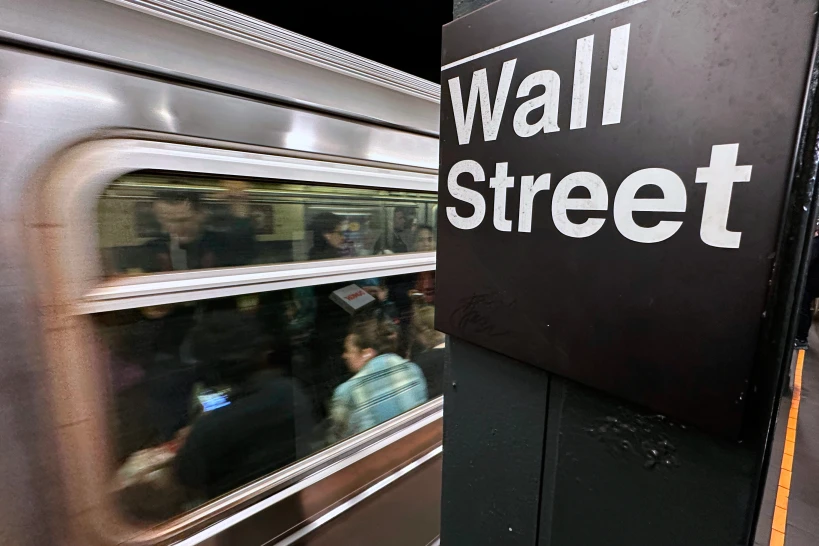
Wall Street stocks moved little as investors assessed economic signals while crude oil prices declined after easing Middle East tensions reduced concerns about supply disruptions.
Wall Street Moves Sideways as Investors Await Fresh Market Signals
US stocks traded in a narrow range on Wall Street as investors evaluated economic developments, corporate earnings, and changing geopolitical conditions. Major indexes showed limited movement as traders balanced optimism over easing global risks with concerns about inflation, interest rates, and future economic growth. The cautious trading session followed a period of heightened uncertainty in financial markets, where investors had closely monitored developments in the Middle East and their potential impact on energy supplies. As tensions appeared to ease, market participants adjusted expectations, leading to lower oil prices and reduced concerns about a sudden increase in energy costs. Technology companies remained a major focus for investors, particularly firms connected to artificial intelligence, semiconductors, and digital infrastructure. After significant gains in recent periods, some investors continued reassessing valuations and looking for opportunities in other areas of the market. Financial, industrial, and consumer-focused companies also attracted attention as investors considered how changing economic conditions could affect different sectors. Lower energy prices provided support for businesses that rely heavily on transportation, manufacturing, and logistics. Market analysts said the lack of a major move in stocks reflected uncertainty rather than weakness. Investors are waiting for additional economic data, corporate earnings reports, and policy signals before making larger adjustments to portfolios. The Federal Reserve’s approach to interest rates remains one of the biggest factors influencing market sentiment. Investors are closely watching inflation trends and labor market data for indications of future monetary policy decisions. While some risks have decreased, analysts warn that markets remain sensitive to unexpected developments. Geopolitical events, energy market changes, and economic data releases can quickly influence investor confidence. The latest session highlights a period of transition for Wall Street, where investors are balancing long-term growth opportunities with concerns about valuation and economic uncertainty. As markets move forward, attention will remain focused on corporate performance, inflation trends, and global stability.
Oil Prices Fall as Middle East Tensions Ease
Crude oil prices declined as investors reacted to signs that tensions in the Middle East were cooling, reducing fears of major disruptions to global energy supplies. The drop in oil prices provided relief to businesses and consumers who had been concerned about rising fuel costs and renewed inflation pressure. Energy markets often react quickly to geopolitical developments because the Middle East remains one of the world’s most important oil-producing regions. Concerns about conflicts affecting production facilities, shipping routes, or supply chains can cause prices to rise rapidly. The recent decline reflected changing expectations among traders who became more confident that immediate supply risks had decreased. Lower oil prices helped reduce pressure on industries that depend heavily on fuel, including transportation, aviation, manufacturing, and logistics. For consumers, falling crude prices can eventually translate into lower gasoline and energy costs. Reduced fuel expenses can improve household purchasing power and support broader consumer spending. Businesses also benefit from more stable energy markets because predictable costs make it easier to plan investments and manage operations. Companies facing high transportation and production expenses often see improved profit margins when energy prices decline. However, analysts noted that oil markets remain vulnerable to sudden changes. Geopolitical tensions can quickly return, and supply concerns could push prices higher again if major disruptions occur. Energy companies may face mixed impacts from the decline. While consumers and energy-intensive industries benefit from lower costs, oil producers may experience pressure on revenues if prices remain lower for an extended period. Investors are closely monitoring global oil demand, production levels, and economic growth expectations. A significant slowdown in global demand could place additional pressure on prices, while stronger economic activity could support higher energy consumption. The recent decline in crude oil prices has provided temporary market relief, but uncertainty remains. Energy markets will continue playing an important role in shaping inflation expectations and investor sentiment.
Cooling Geopolitical Risks Support Investor Confidence
The easing of Middle East tensions has helped improve investor sentiment by reducing concerns about a possible disruption to global energy markets. Geopolitical uncertainty has been one of the major factors influencing financial markets, with investors closely monitoring conflicts and diplomatic developments. When tensions rise in major energy-producing regions, markets often react quickly because disruptions could affect oil supplies and global economic stability. The recent reduction in concerns has allowed investors to focus more closely on corporate earnings, economic data, and market fundamentals. Analysts say geopolitical developments remain an important risk factor, but reduced immediate threats have allowed some investors to shift attention back toward economic trends. Companies are now being evaluated based on revenue growth, profitability, and business performance rather than only external risks. The improvement in market sentiment has benefited sectors that are sensitive to energy costs. Airlines, transportation companies, and manufacturers often perform better when fuel prices become more predictable. However, investors remain cautious because geopolitical conditions can change rapidly. Financial markets have become increasingly responsive to global events, meaning unexpected developments can quickly affect stocks, commodities, and currencies. The situation also highlights the importance of diversification for investors. Different sectors respond differently to changes in energy prices and geopolitical conditions, making balanced investment strategies increasingly important. Businesses are similarly adjusting their strategies by monitoring global risks and preparing for different economic scenarios. Companies with flexible operations and strong financial positions are generally better positioned to handle market uncertainty. While the cooling of tensions has provided some relief, analysts say investors should not assume risks have disappeared. Global markets continue to face challenges from inflation, interest rates, trade conditions, and economic uncertainty. The latest market movement shows how closely connected geopolitical events and financial performance have become. Even temporary changes in international conditions can influence decisions made by investors and businesses worldwide.
Investors Look Ahead as Markets Search for Direction
With stocks moving sideways and oil prices declining, investors are looking ahead to determine whether markets can regain stronger momentum or remain trapped in a period of uncertainty. The direction of financial markets will likely depend on upcoming economic reports, corporate earnings, and central bank decisions. Many investors are watching whether lower energy prices will contribute to slower inflation and create more favorable conditions for economic growth. If inflation continues improving, expectations for future interest rate adjustments could support broader market confidence. Corporate earnings will also play a critical role in shaping investor decisions. Companies that demonstrate strong revenue growth and effective cost management may continue attracting investment, while businesses facing weaker demand could experience greater pressure. The artificial intelligence sector remains a major market theme, but investors are becoming more selective after a period of strong gains. Rather than focusing only on companies connected to AI, many investors are looking for businesses with sustainable profits and reasonable valuations. Smaller companies and previously overlooked sectors may benefit if economic conditions improve. A broader market recovery could create opportunities beyond the largest technology firms. Financial analysts expect volatility to continue as investors respond to changing information. Markets rarely move in a straight line, and periods of uncertainty often create both risks and opportunities. Businesses are also monitoring conditions closely as they make decisions about hiring, investment, and expansion. Stable energy prices and reduced geopolitical concerns could provide greater confidence for long-term planning. The latest Wall Street session reflects a market environment where investors are balancing caution with optimism. While risks remain, easing oil prices and improved geopolitical conditions have provided some support. The coming weeks will be important as investors evaluate whether current conditions represent the beginning of a stronger market trend or simply a temporary period of stability.